
SLC Laser PMU Removal - serving Salt Lake City
Pico and Nd:YAG laser technologies are used in tattoo removal to break down pigment particles in the skin, with each technology offering different advantages depending on pigment type, color, and depth.
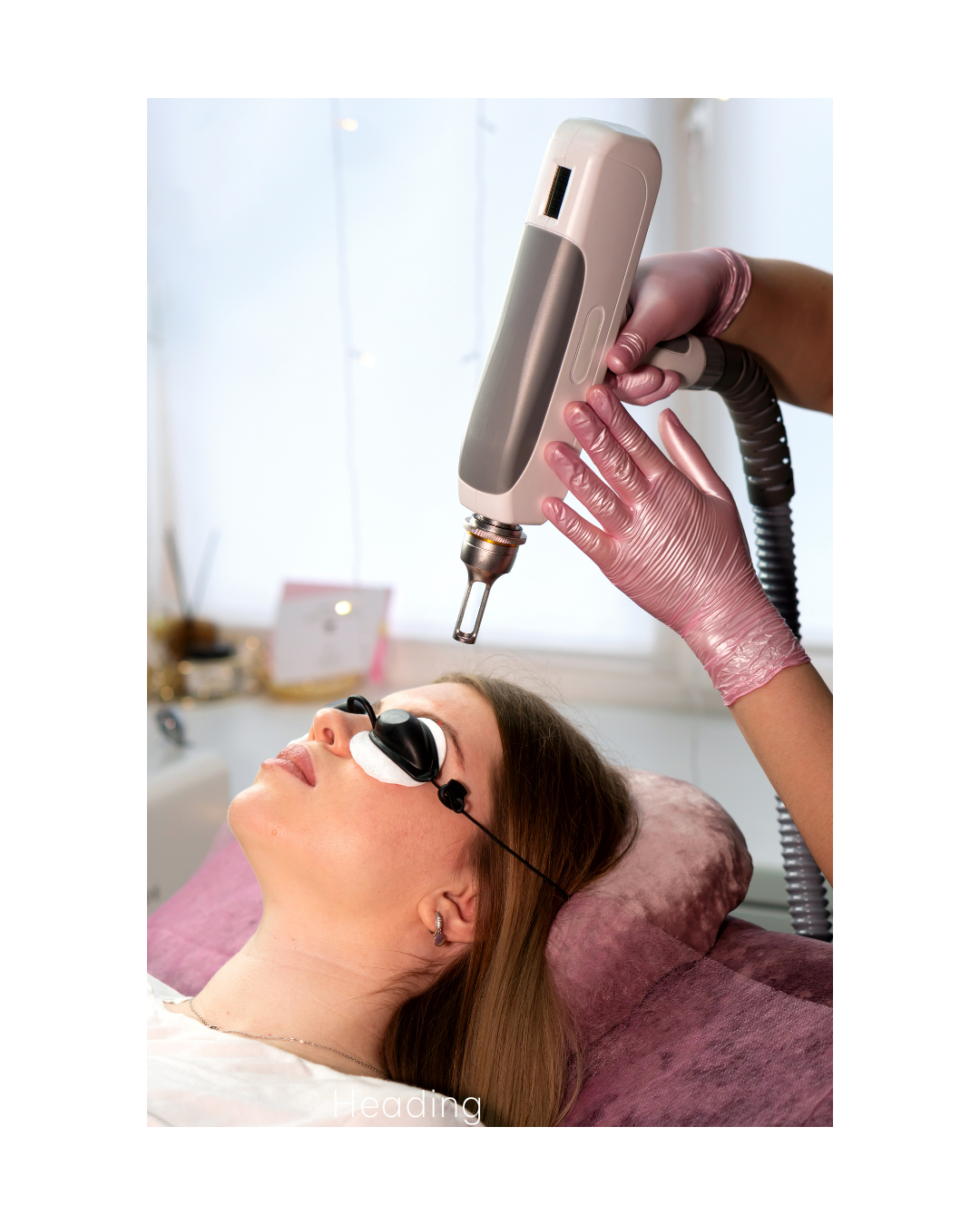
The Difference Between Pico and Nd:YAG Laser Technology
Laser tattoo removal technology has advanced significantly, and understanding the difference between pico and Q-switched Nd:YAG lasers is essential when choosing the most effective treatment for permanent makeup and body tattoo removal.
At SLC Laser PMU & Tattoo Removal, we utilize advanced laser technology to safely and effectively treat both cosmetic tattoo pigment and body tattoos, with the ability to target a wide range of ink colors.
What is Nd:YAG Laser Technology?
Q-switched Nd:YAG lasers have been used for many years in tattoo removal. They deliver energy in nanoseconds (billionths of a second), targeting pigment and breaking it into smaller particles that the body can gradually eliminate.
Nd:YAG lasers are effective for:
darker pigments such as black and brown
deeper ink placement
certain types of permanent makeup
However, because the pulse duration is longer, more heat is generated in the skin, which can sometimes lead to less efficient fragmentation of certain pigments.
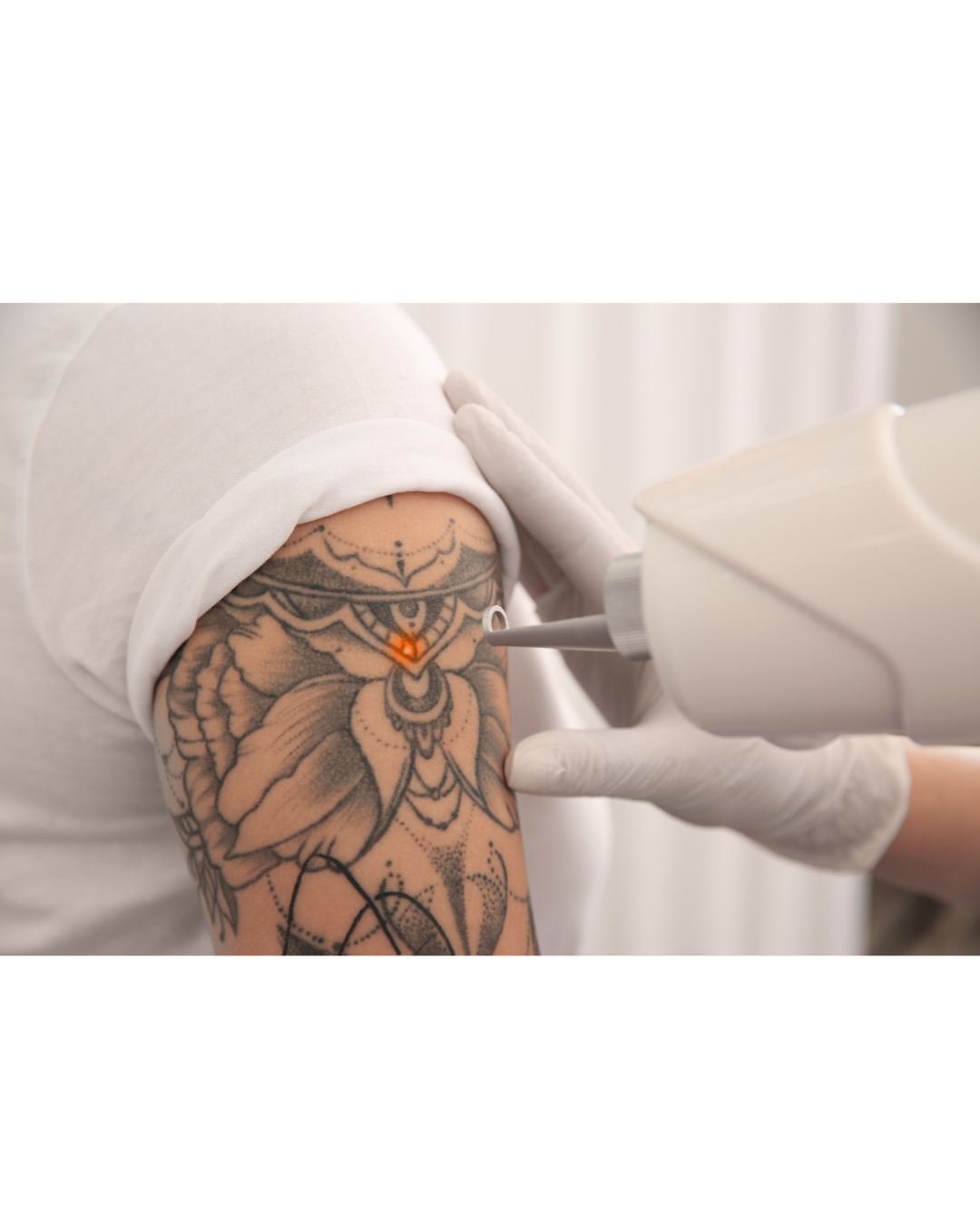
What is Pico Laser Technology?
Pico lasers represent a more advanced generation of tattoo removal technology. They deliver energy in picoseconds (trillionths of a second), allowing for a more rapid and precise impact on pigment particles.
This ultra-short pulse duration creates a stronger photoacoustic effect, meaning pigment is shattered into much finer particles with less reliance on heat.
Our pico technology operates with:
a pulse width of approximately 350 picoseconds
power output of up to 5000 watts
This combination allows for more efficient pigment fragmentation and the ability to treat a broader range of ink colors.
Key Differences Between Pico and Nd:YAG
Pulse duration:
Pico lasers operate in picoseconds, while Nd:YAG lasers operate in nanoseconds. The shorter pulse duration allows for more precise energy delivery.
Energy delivery:
Pico technology produces a stronger photoacoustic effect with less thermal buildup, helping break pigment into smaller particles more efficiently.
Color versatility:
Pico lasers are more effective at targeting a wider range of ink colors, including more resistant pigments that may not respond as well to traditional lasers.
Treatment efficiency:
Because pigment is fragmented more effectively, pico treatments can often lead to more consistent fading over time.
Why Technology Matters for Permanent Makeup Removal
Permanent makeup pigments are more complex than body tattoo ink. They often contain ingredients such as iron oxide, organic pigments, and titanium dioxide, which can respond unpredictably during removal.
Having access to advanced YAG and Pico laser technology allows treatments to be adjusted based on:
pigment composition
color changes during removal
skin response
treatment goals

Why Technology Alone Is Not Enough
While advanced laser technology plays an important role in tattoo removal, the outcome is not determined by the device alone.
At SLC Laser PMU & Tattoo Removal, we utilize both pico and Nd:YAG laser technologies and select the appropriate settings and approach based on each individual case. Pigment type, color, depth, previous treatments, and skin response all influence how laser energy should be applied.
Proper technique, experience, and understanding of pigment behavior are critical. Cosmetic tattoo pigments often contain complex ingredients such as iron oxide, organic colorants, and titanium dioxide, which can respond unpredictably if not treated correctly.
Pico laser technology offers advanced capabilities, but it is not a standalone solution. The effectiveness of any laser treatment depends on how it is used.
The Difference Is in the Expertise
What sets our clinic apart is the combination of advanced technology with deep knowledge of permanent makeup, pigment chemistry, and skin response.
Our background in permanent makeup allows us to:
understand how pigment was originally implanted
anticipate how different pigments will respond
adjust treatment in real time
minimize unwanted color shifts
create a clear pathway for either full removal or correction
This level of expertise cannot be replaced by technology alone.
A More Complete Approach to Removal
By combining:
pico laser technology
Nd:YAG laser capabilities
multiple removal methods
advanced knowledge of pigment and skin
we are able to deliver a more precise, customized, and effective treatment process.
The best results come from the right technology used with the right knowledge — and both are essential in achieving safe, predictable permanent makeup removal.
Pico vs. YAG Laser Common Questions Answered
Which laser is better for permanent makeup removal: Pico or Nd:YAG?
Both pico and Nd:YAG lasers can be effective, but the best choice depends on the pigment type, color, and how the ink responds during treatment. Pico lasers use ultra-short pulse durations to break pigment into smaller particles more efficiently, while Nd:YAG lasers are often effective for deeper or darker pigments. In many cases, using both technologies strategically provides the most controlled and effective results.
Can Pico lasers remove all tattoo ink colors?
Pico laser technology is capable of targeting a wider range of ink colors compared to traditional lasers, including more resistant pigments. However, no laser can guarantee complete removal of every pigment, particularly cosmetic tattoo pigments such as yellow or titanium dioxide. Treatment success depends on pigment composition, and in some cases additional methods may be required to achieve the desired result.
Does having a Pico laser guarantee better results?
Not necessarily. While pico technology is more advanced, results depend heavily on how the laser is used. Factors such as correct settings, technique, understanding of pigment behavior, and treatment planning all play a critical role. The combination of advanced technology and expertise in permanent makeup, pigment chemistry, and skin response is what ultimately determines the outcome.